
 FREE SHIPPING ON ORDER OVER $75
 LOYALTY PROGRAM
 SHIPPING WORLDWIDE
CARBON FIBRE FILAMENT
Carbon Fiber Filament for 3D Printing: Stronger, Stiffer, and Lighter
Carbon Fibre Filament is the type of filament material where it mixed with short carbon fibres mixed with thermoplastic with any known materials such as PLA, PETG, Polycarbonate, ABS & Nylon. The main purpose is to make carbon fibre material more strong in strength and stiff. This will also help to make overall weight of the material less heavy compared to an individual ones.
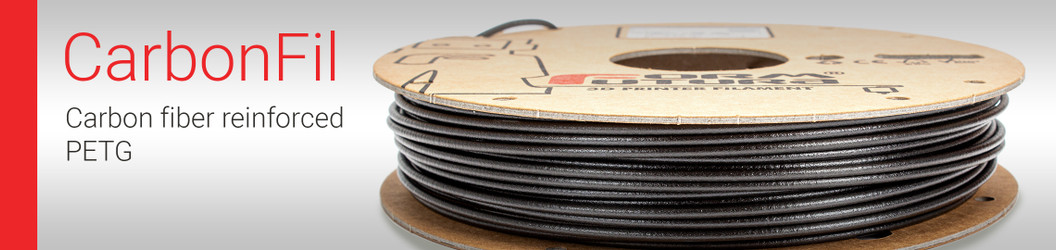
Formfutura CarbonFil is a 15% carbon fiber reinforced PETG based 3D printer filament that is extremely stiff. CarbonFil 3D prints 3D prints with a high dimensional accuracy and virtually no warping.
Austic delivers high quality FormFutura 3D Printing Carbon Fibre Filaments at Wholesale prices to your doorstep anywhere in Australia. We have wide range of innovative 3D Printing Filaments & Consumables with all the major brands.
FAQs for Carbon Fibre Filament
Q1. So what is carbon fibre filament — and how is it different from regular PLA or ABS?
Ans - Carbon-fibre filament mixes chopped (or sometimes longer) carbon fibres into a base plastic (like PLA, PETG, ABS, Nylon, etc.) to make the final material much stronger, stiffer, and more stable than standard filaments.
Q2. Why should I pick carbon fibre filament for my 3D prints — what are the perks?
Ans - Because prints with carbon fibre filament get boosted strength, rigidity, and heat-resistance. That means lighter yet tougher parts that resist warping, hold shape under stress, and can handle more demanding uses than plain plastic prints.
Q3. What printing settings or gear do I need to use carbon fibre filament properly?
Ans - a. Ideally, use a hardened steel (or wear-resistant) nozzle — carbon fibres can erode standard brass nozzles fast.
b. Use proper bed adhesion (good build surface) and print with suitable ambient/bed temperature as per filament specification for best results.
Q4. Do I need to upgrade my 3D printer or components to print with carbon fibre filament?
Ans - Yes — because the carbon fibres are abrasive, printers without hardened nozzles or robust feed systems may suffer wear or clogging. A printer with hardened steel nozzle, good extruder gear, and possibly an enclosed frame works best.
Q5. What kinds of prints or projects are carbon fibre filaments best for?
Ans - a. For functional parts that need strength, stiffness, and durability — like mechanical components, structural parts, niches needing heat or load resistance — carbon fibre filament is a great pick.
b. Also useful when you want a matte, high-quality surface finish and stable geometry.
Q6. Are there downsides or limitations with carbon fibre filament I should know about?
Ans - a. Because of the fibre reinforcement, the material tends to be more brittle — less flexible than plain plastic.
b. The abrasive nature can wear down printer nozzles/hardware if not properly equipped.
c. Also, depending on base material, layer adhesion or impact resistance might be compromised compared to pure plastics.
Q7. How should I store carbon fibre filament — and care for printed parts — for best results and longevity?
Ans - a. As with many technical filaments, store spools in a cool, dry place, away from moisture and direct sunlight; moisture or humidity can affect print quality depending on base material.
b. For final parts: treat them like engineering components — use them where strength, stiffness and stable shape matter; avoid using them where flexibility or high-impact resistance is critical (unless the base plastic supports that).